
When Covid is finally over how often would you like to work from home?
For the past 16 months or so most of us have been desperately wanting things to go back to normal – whatever that looked like for you before the pandemic. Working from home has become the new normal for many, which has been both a blessing and a curse. The benefits of working from anywhere has led to a new level of freedom not known before, with “semigration” becoming a realistic option going forward. Recent property trends have shown that plenty of people are moving away from the large metropolitan areas to smaller towns, while staying with their current employer. An upgrade in lifestyle, while being able to maintain your level of income as an added benefit seems to be a positive side-effect of a challenging situation.
With vaccines rolling out and plans being made for a return to normal somewhere on the horizon (although it might still be some way off in South Africa), we wanted to know how people are planning to work in the future. We posted this question on a LinkedIn poll recently and the results are quite revealing:
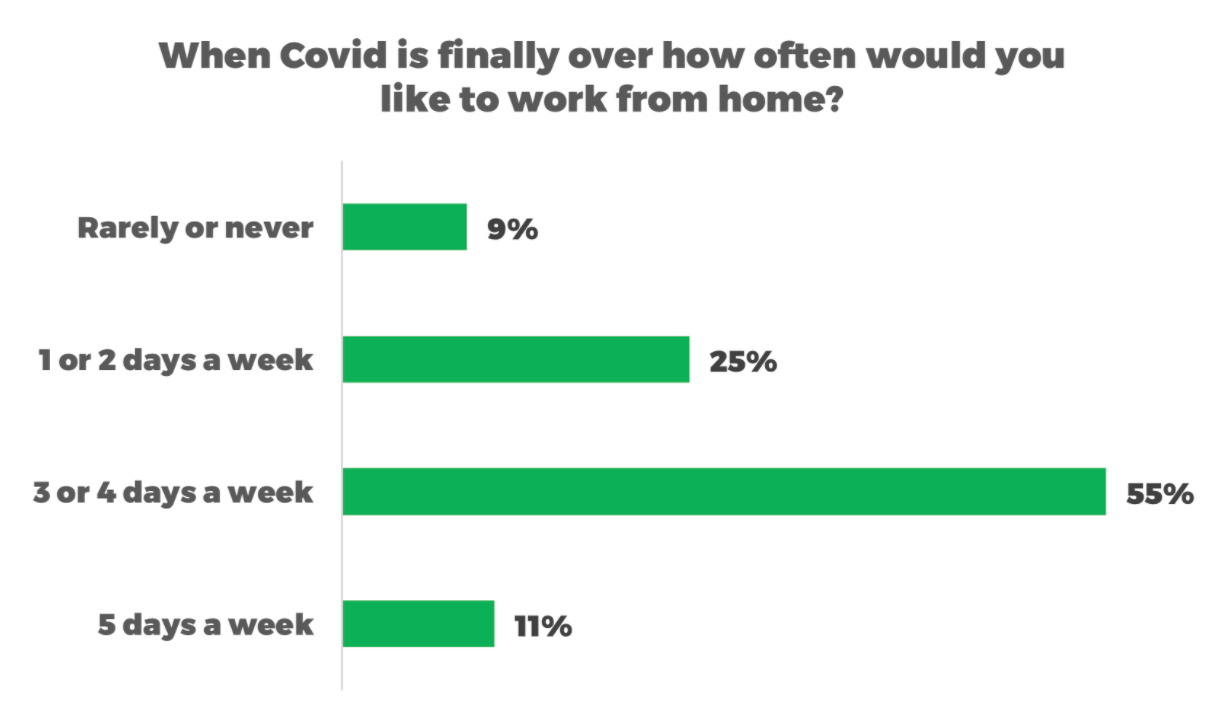
Less than 10% of people are hoping for things to go back to exactly the way they were before, working from the office every day. At the other extreme, 11% are looking to work from home permanently. The balance of 80% sits in the middle, hoping that a form of hybrid work will become the new norm going forward.
Most companies and managers have realized that working remotely is a viable alternative and that people become more productive (in most cases) when they can work from home. Unfortunately, this has come at a price: many employees and managers have been struggling with a phenomenon known as Work-From-Home-Guilt (WFHG), the notion that you need to be online and available all the time. This has led to a blurring of the lines between worktime and the rest-of-life time. The result has been drastically heightened levels of fatigue, stress, and burnout since we are struggling to end the workday at the time we usually did. Looking back, sitting in traffics was actually a blessing in a way, as it provided a natural boundary between work and home – providing us an opportunity to switch between our different modes of being.
Another drawback that has been identified by recent studies shows that people that permanently work remotely are less likely to be considered for promotions when new positions become available. Out of sight, out of mind it seems.
Business leaders have been challenged with maintaining a strong, vibrant company culture when their people are not in the same room or building. Many have found innovative ways to bypass the issue, but it will continue to be a challenge for most, particularly when new people are onboarded or need to be trained.
Obviously, there are pros and cons to both approaches. A hybrid solution is likely to be the most viable solution in the future. Getting everyone together on specific days and then trusting them to get the job done remotely seems to be the most likely outcome at this stage.
Where do you stand on the issue? Let us know here.
In closing…
Do you need help designing your return-to-work strategy or need to invest in your people to help strengthen their resolve in these challenging times? Get in touch at info@purposeworks.co.za. We would love to help you design and implement the best approach for your business.

At PurposeWorks we are all about Making You and Your Work Rock. Our focus is on Organisational Health and Design, Employee Centered Culture, Leadership Development and Performance Coaching. For more information on how we can help you create a work environment that rocks, develop a great team, become an inspiring leader or unlock your personal excellence talk to us at info@purposeworks.co.za.

Your mode of explaining all in this piece of writing is actually nice, every one be
capable of effortlessly be aware of it, Thanks a lot.